The benefits of sudoku: why a daily puzzle feels so good
· Sudokaki
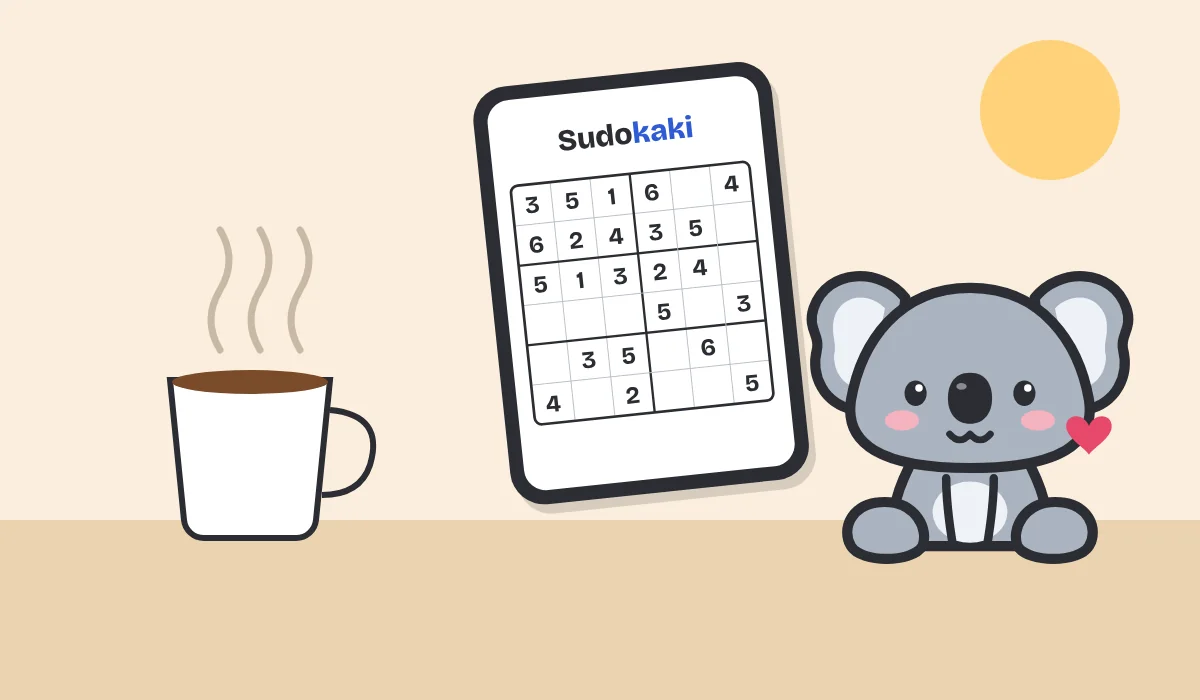
In short. Sudoku feels good because it gives you a real moment for yourself: a few calm minutes where your mind works without pressure, a small challenge at your level and the joy of finishing the grid. Played every day, like a walk or a jigsaw puzzle, it becomes a simple ritual that keeps your mind awake and puts you in a good mood.
A moment just for you
There's that little moment, with your morning cuppa, on the train or tucked up in bed at night, when everything slows down. You open your puzzle and the rest of the world can wait. No notifications, no noise, just you and a few digits to place.
That may be the first benefit of sudoku, and the simplest: it gives you a break. Five minutes with a 6×6 sudoku, twenty with a 9×9. Long enough to catch your breath, short enough not to feel guilty.
Why is sudoku so relaxing?
Because it fills your head completely, but gently. While you're looking for where the 7 goes, you're not thinking about your shopping list or your day. Psychologists call this flow: being so absorbed in an activity that you lose track of time.
And nothing is at stake. Nobody is grading you, nothing is urgent. On Sudokaki you can even pause the game, close the page and come back tomorrow: your puzzle waits exactly where you left it. Zero stress: that's the whole idea.
🐨 Kaki's tip: if a puzzle is getting on your nerves, put it down. Go for a stroll, put the kettle on. When you come back, you'll often spot the digit that escaped you straight away. It isn't magic, it's your brain that kept searching during the break.
Is sudoku good for your brain?
Yes, in several ways at once:
- Logic: every digit you place is a small deduction. "The 4 can't go here, or there, so it goes there."
- Memory: you keep in mind which digits a row is missing while looking elsewhere in the grid.
- Focus: one mistake and the grid jams, so you learn to check and to pay attention.
- Patience: hard puzzles reward people who don't give up.
Good news if maths was never your thing: there's no arithmetic in sudoku, ever. The digits are just symbols. You could swap them for colours or animals (which is exactly what our cat sudoku and dog sudoku do). It's pure reasoning.
What does the research say?
A large British study called PROTECT, run by the University of Exeter and King's College London with more than 19,000 adults aged 50 and over, found that people who regularly do number puzzles such as sudoku score better on tests of attention, reasoning and memory (Brooker et al., International Journal of Geriatric Psychiatry, 2019).
The researchers are careful, and so are we: the study shows a link, not proof that sudoku protects against Alzheimer's or any other disease. What we can honestly say is that keeping up an activity that makes you think, regularly and with pleasure, is one of the good habits for ageing well, alongside walking, spending time with others and sleeping well.
The joy of finishing a puzzle
You know that moment. Three cells left, then two, then one. You place the last digit and the grid lights up: Well done! Kaki throws his arms in the air, and you catch yourself grinning at your screen.
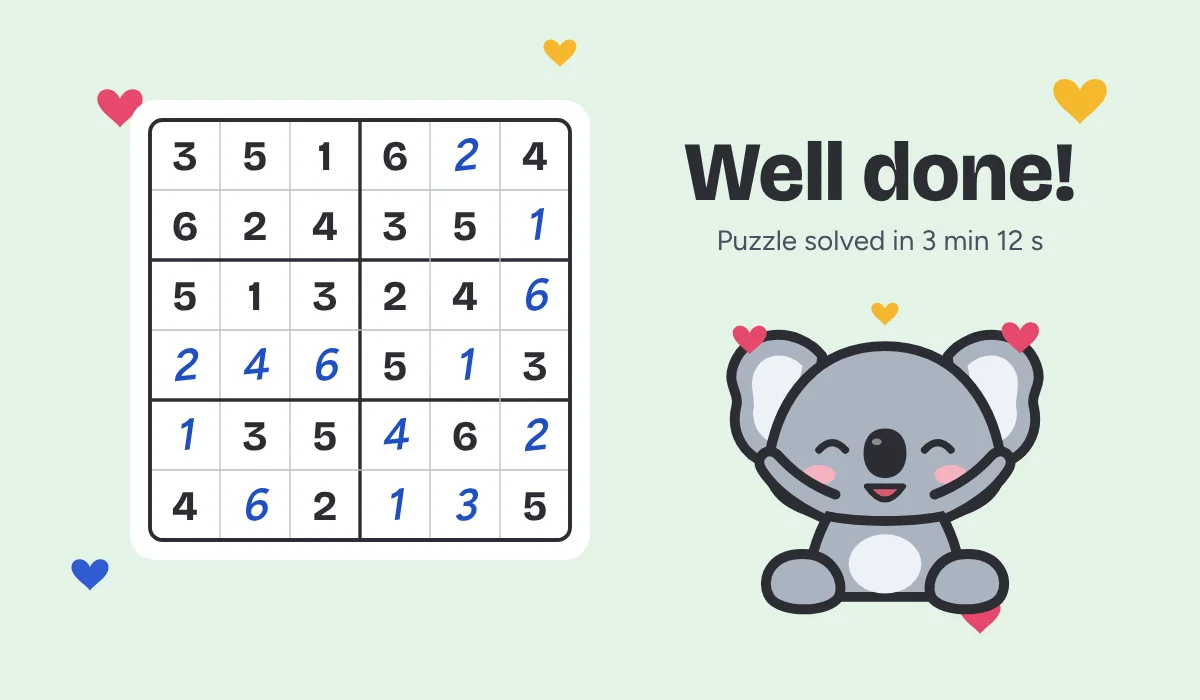
That little pleasure is worth more than it looks. It's the satisfaction of having done something by yourself, with no help, just with your own head. And since a puzzle only takes a few minutes, you can treat yourself to it every day.
A challenge at your level that grows with you
The best thing about sudoku is that there's always another step up. You start with a 4×4 that takes a minute. Then the 6×6 feels easy, so you move to the 9×9. One day you finish your first Expert puzzle and feel like you've climbed a mountain. After that, there's the Jigsaw, the 12×12, the 16×16…
Your statistics keep track of your progress: puzzles solved, best time, average. Beating your own record by a few seconds is a challenge you can take on every single day. And if you want to know how to reach the next level, our How to play and Advanced techniques pages are there for you.
Play with friends and family
Sudoku has a reputation for being a bit of a solo hobby. Not on Sudokaki.
Every day, everyone gets the same daily sudoku. When you finish it, you can send your time to your friends on WhatsApp or by text: they play exactly the same puzzle and try to beat you. Over tea, someone asks: "So, what was your time?" Gran against the grandkids, the office against each other, the Thursday walking group…
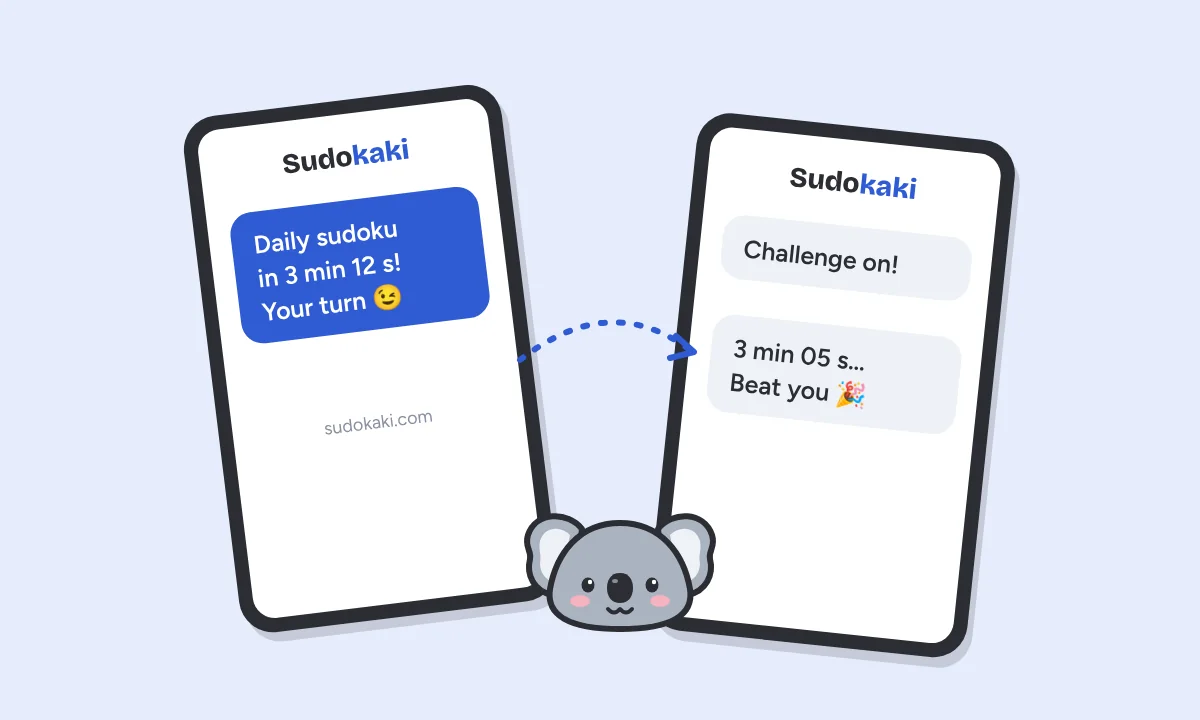
And when someone gets stuck, you talk about it. You explain a technique to each other, you share a trick. Sudoku becomes a conversation.
With children, it's also a game to play together: a grown-up and a child in front of a 4×4 or the cat sudoku, working out as a team where the little cat goes. They learn to reason without even noticing.
A little ritual for the mind, like walking for the body
We all know a short walk every day does the body good. Sudoku is a bit like that for the mind: you don't need to do a lot, you just need to do it often.
Many players build themselves a small ritual:
- in the morning: the daily sudoku with a cuppa, to get the brain going;
- during the day: a walk, for the body and some fresh air;
- in the evening: a jigsaw, a book or one last calm puzzle.
Mixing things up is a good idea. If you like jigsaw puzzles too, have a look at e-puzzles.fr: thousands of free jigsaws to do online, a new one every day, from a few pieces for little ones up to 1,000 pieces for the most patient. A sudoku in the morning, a jigsaw in the evening: the perfect pair. Sudoku fits right into this small wellbeing routine: it's free, it fits in your pocket, and it can be printed for anyone who prefers pencil and paper.
Your turn
Fancy a go? Start right now with the daily 6×6 sudoku: it's quick and it feels good. Then send your time to someone you love and dare them to beat it. It's free, no sign-up, and your game stays saved on your device.
Frequently asked questions
Is sudoku good for your memory?
It exercises short-term memory and focus every time you play. A large study (PROTECT, 2019) found that adults over 50 who often do number puzzles score better on memory and reasoning tests. It's an observed link, not a medical guarantee.
Can sudoku prevent Alzheimer's disease?
Nobody can claim that today. Researchers see a link between thinking games and a healthy brain, but can't say that sudoku alone protects you. It remains a great hobby to combine with physical activity and social life.
How long should you play each day?
A few minutes is enough. A daily sudoku takes 2 to 5 minutes in 6×6 and 10 to 30 minutes in 9×9. What matters most is doing it regularly, and enjoying it.
Is sudoku good for children?
Yes: it teaches logic, patience and focus without any arithmetic. From age 5 or 6 with a grown-up, on a 4×4 or with the cat and dog sudokus.
Does sudoku help you relax?
For many players, yes. It absorbs your attention with nothing at stake and no pressure, which helps you switch off from everyday worries. If a puzzle gets frustrating, a short break is usually enough to bring the fun back.